
The Farmstead Story
How a worn-out cattle pasture above the Costa Ballena coast became twelve homesites, a flowing creek and 1,500 new trees.
Finding the land
During COVID, Leo, Moises and I spent over a year looking for land. They rode their motorbikes up and down the coast, from Dominical all the way to Palmar Norte. They met owners, walked properties, took photos, asked questions, and sent me everything, every single day.
About a year in, they sent me a photo of the ocean from a lot that had been for sale. But I wasn’t looking at the ocean. Down in the front of the photo was this wide-open piece of land with cattle on it. I asked them, “Who owns that?”
Turns out it was Don Miguel. He owned the lot and the 18 acres attached to it. So we walked the land, got to know Miguel, and tried to understand what he wanted. We made an offer and waited. A few days later he came back to Leo and Moises and said, “Let’s do it.” Handshake.
What we bought
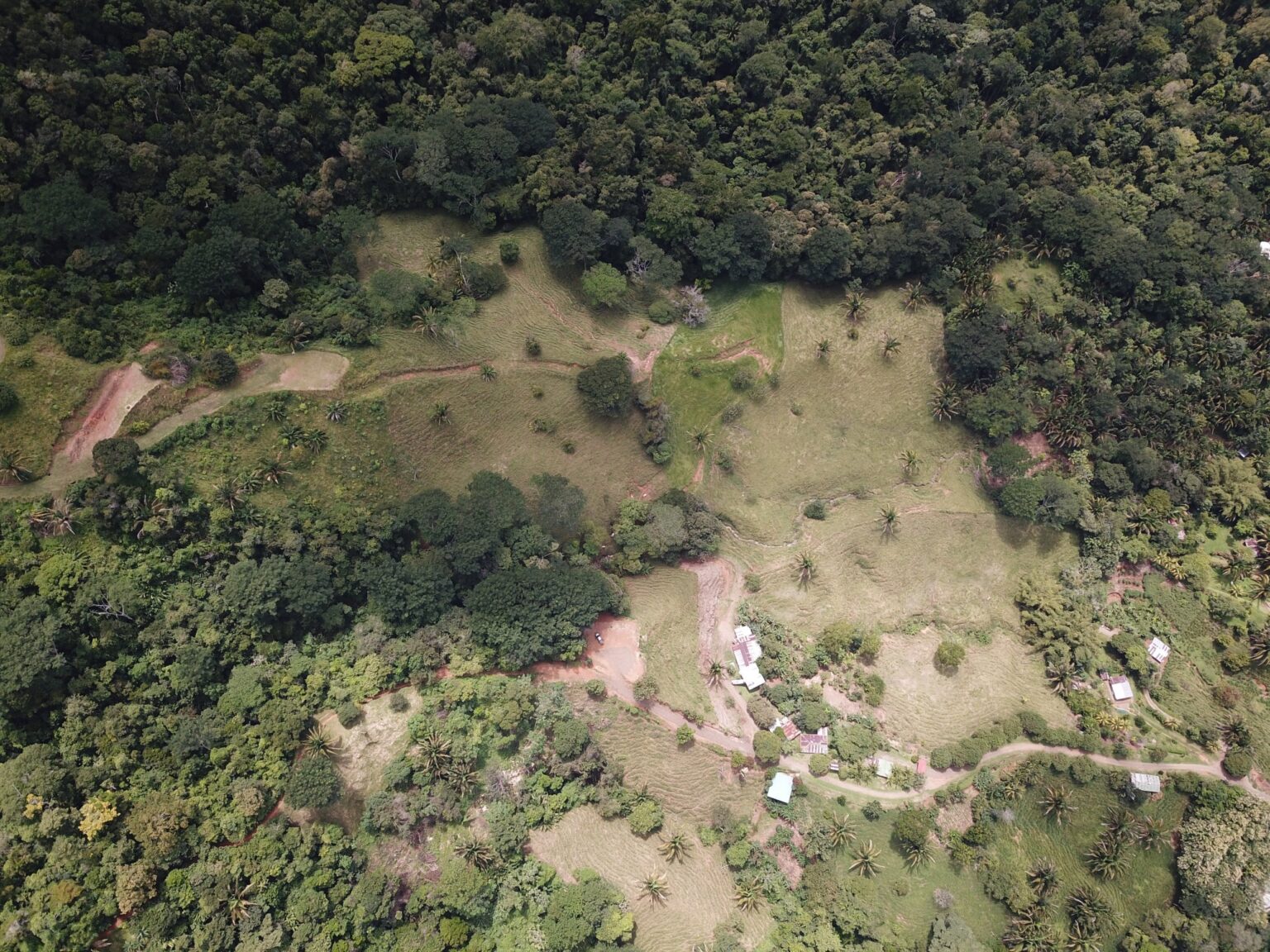
Now, we knew what we were buying. Years of cattle had overgrazed it. The soil was dead. There were only a few trees, the creek was running dry, and the hillsides were eroding. But you could see the beauty underneath. We knew it could come back.
Bringing it back
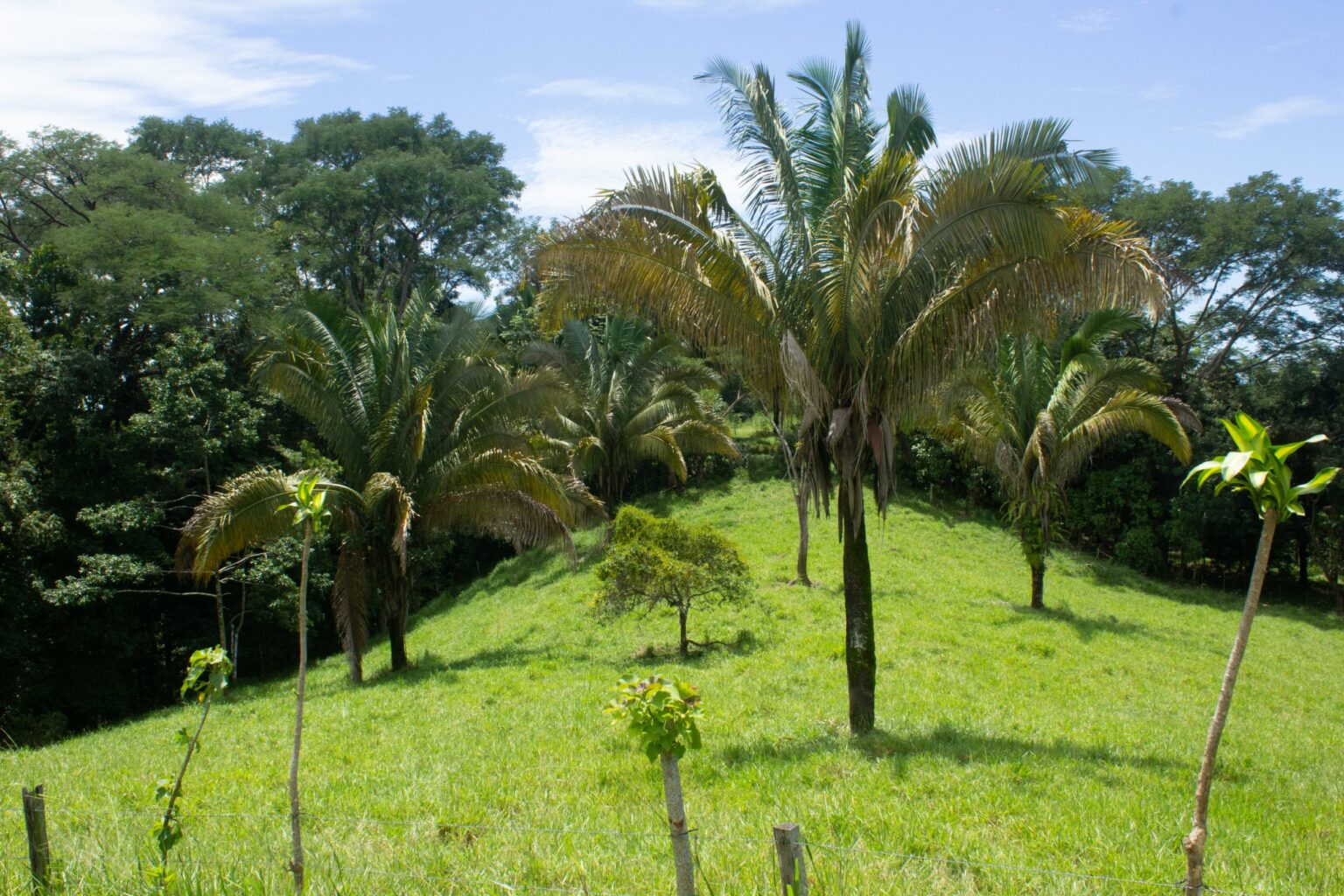
So we learned. We brought in experts, we read, we asked a lot of questions. We pulled out the cattle grass and replaced it with organic grass, trees and plants. We fought the erosion with vetiver, geobags, perennials, shrubs and palms. (Here’s how we did it, step by step.)
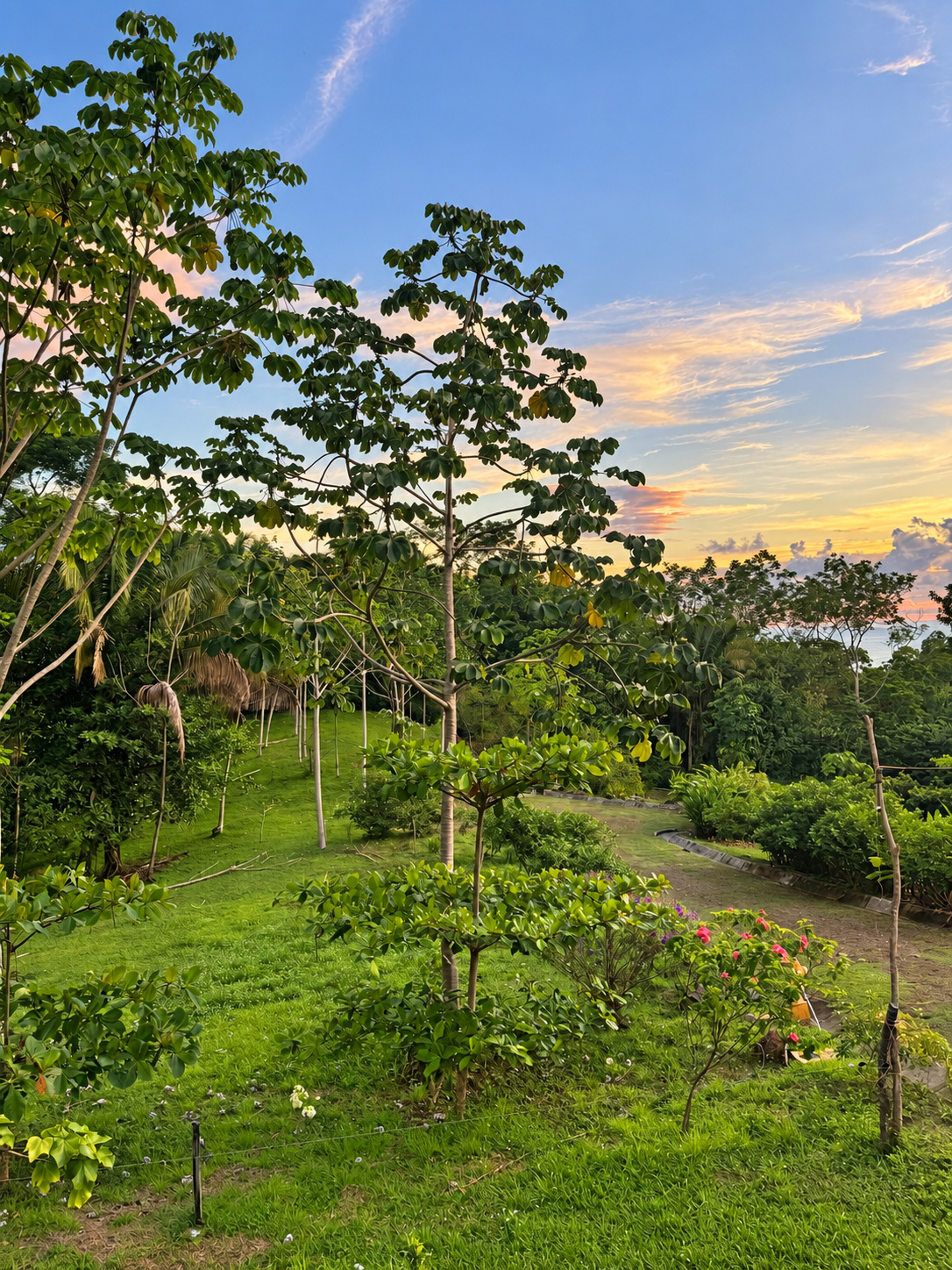
We’ve planted 1,500 trees on this land. Hundreds of them went in along the creek, planted by Moises Sr., Memo, Minor, Blane Kirby, Leo, Moises and Chamba. Those trees have grown tremendously. They give shade, their roots hold the soil, and they feed it. And that creek that was running dry? It’s flowing today.
Building it right
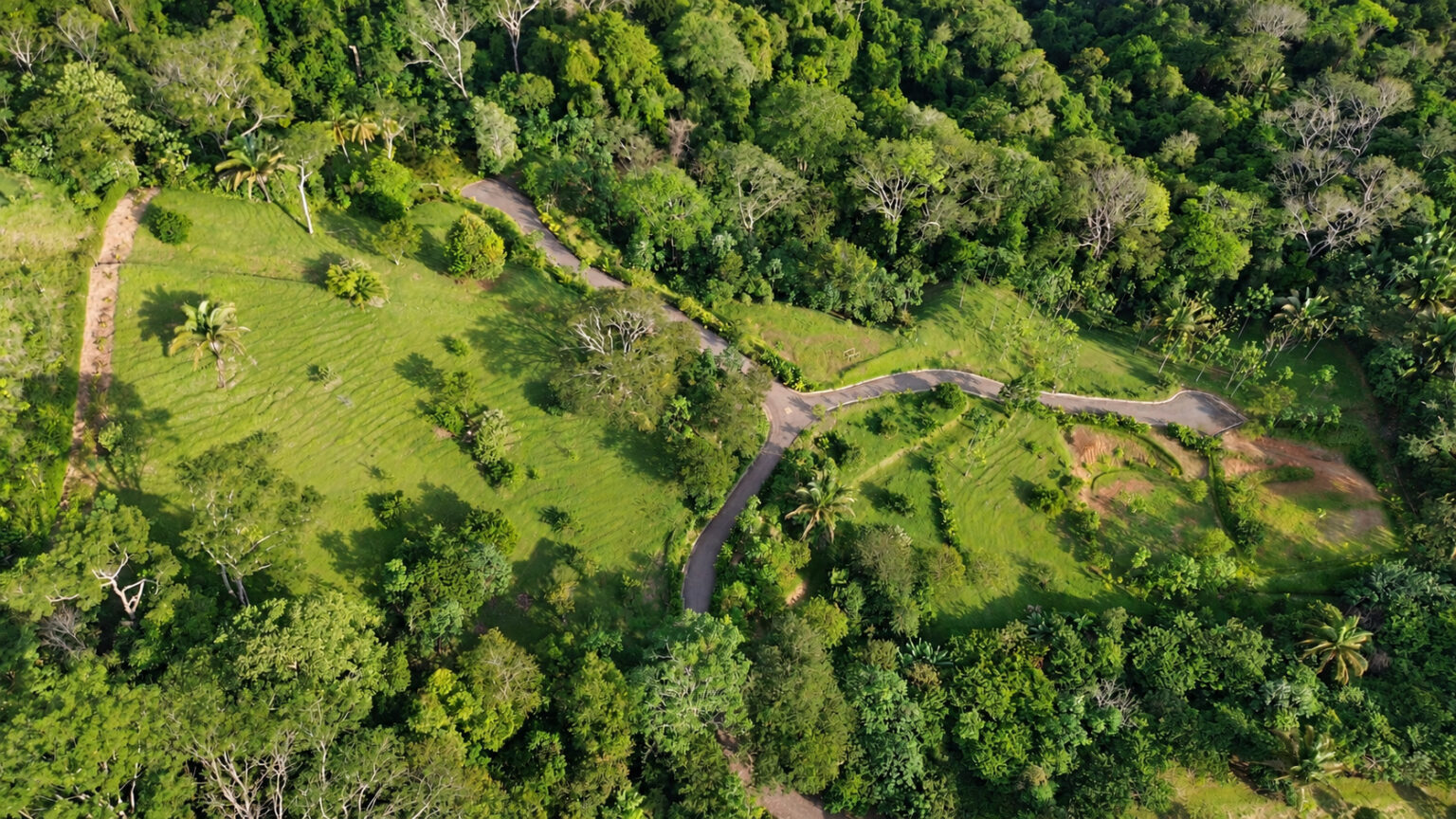
Then came permitting. Years of it. We went after the approval that let us control density and own our own infrastructure, so there will only ever be twelve homes here. Along the way we donated the funds to build the ASADA water tanks and helped bring public water to the community. We paid to extend permanent power up to the top of Playa Hermosa, and brought fiber optic with it.
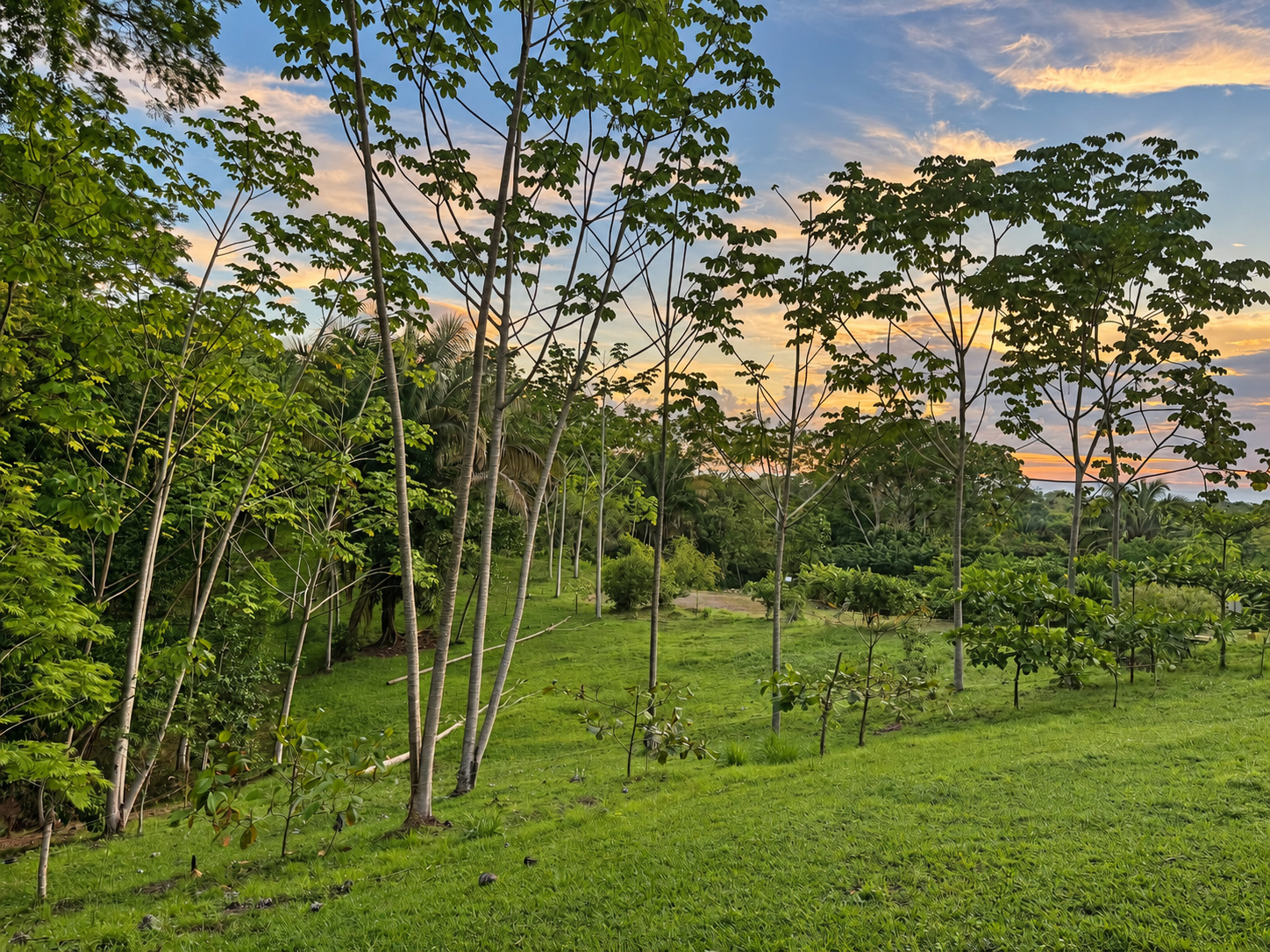
Once we had our permits, we built. Compacted gravel roads. Underground electric. An ASADA water meter on every lot. Fiber run underground to every lot. Permanent concrete drainage, oversized. And we kept planting: fruit trees, gardens. We brought in bees. Native trees and native grass took hold again, and the wildlife came back: macaws, toucans, monkeys. Our two quarter horses, Cali and Penny, graze where the cattle used to.
The first home
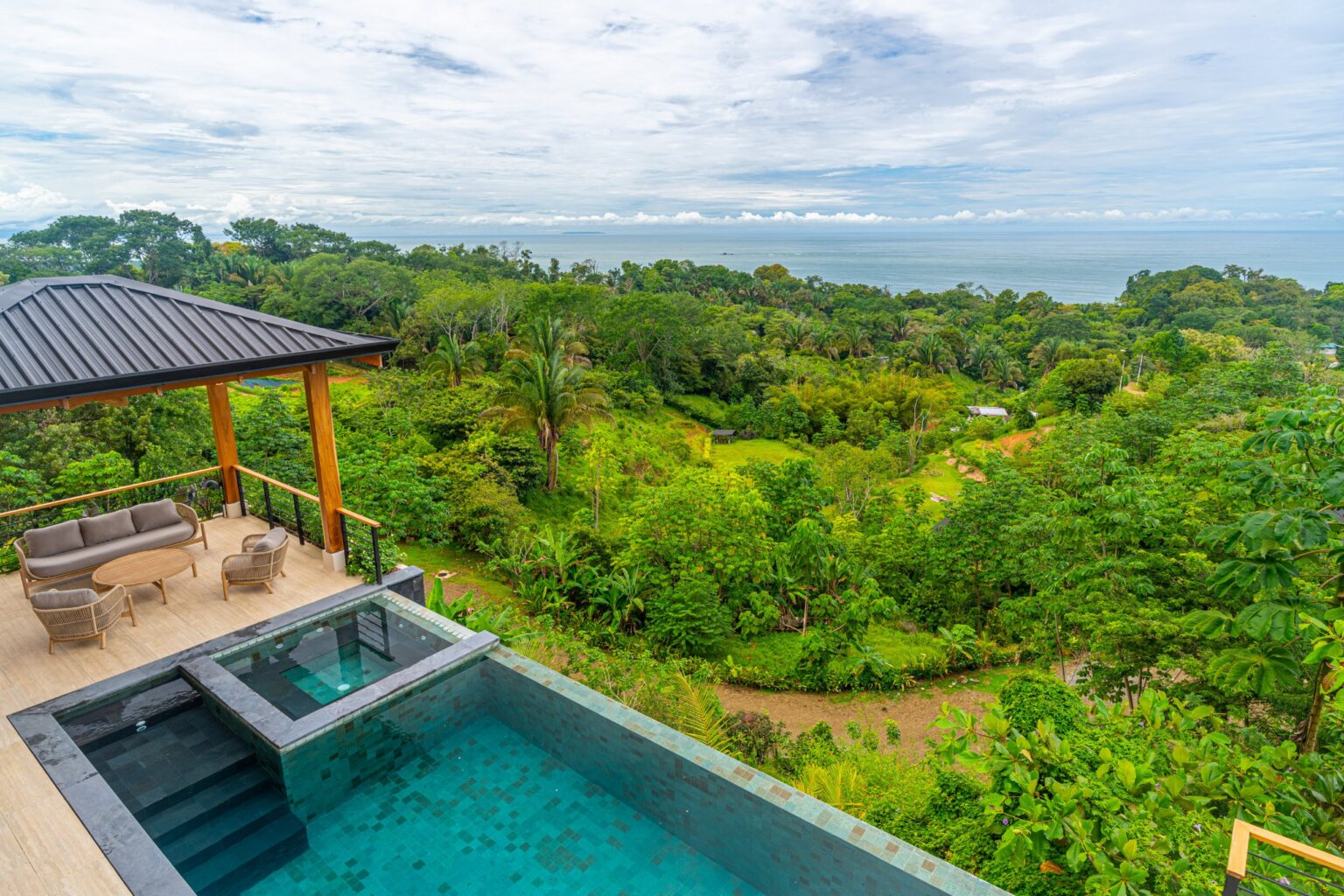
In 2023 and 2024 we built our first home, Villa Del Cielo, looking out over the Pacific. It sold to a group of gentlemen who live there half the year now, and who have become great friends.
None of this was just me. It was built by a team of people who have poured their heart and soul into this project.
What comes next
We didn’t set out to sell lots. We set out to bring a piece of land back to life. Today the soil is alive, the creek is running, and the macaws are back.
Now we’re looking for the people who will build here. Not just buyers: neighbors. People who want a home that restores them, on land they own outright, with their own water, power and fiber already in the ground. There will only ever be twelve homes at Farmstead. We want every one of them to belong to someone who sees what I saw in that first photo.
Come walk the land. The best way to understand Farmstead is to stand on it. We’ll walk you through the lots, down to the creek and up to the view, and you’ll probably meet Cali and Penny along the way.
— Jed Kirby, founder, Farmstead Collection