
How We Restored 18 Acres of Overgrazed Pasture in Costa Rica
When we bought the land that became Farmstead Collection, it had been grazed by cattle for years. Here’s what we found, what we did about it, and what came back.
What years of cattle had done
The land sits above the Costa Ballena coast, between Uvita and Dominical. When we closed on it, the soil was dead. There were only a few trees. The creek was running dry, and the hillsides were eroding. You could see the cattle trails cut into the slopes, and bare dirt in the places where the hillside was washing away.
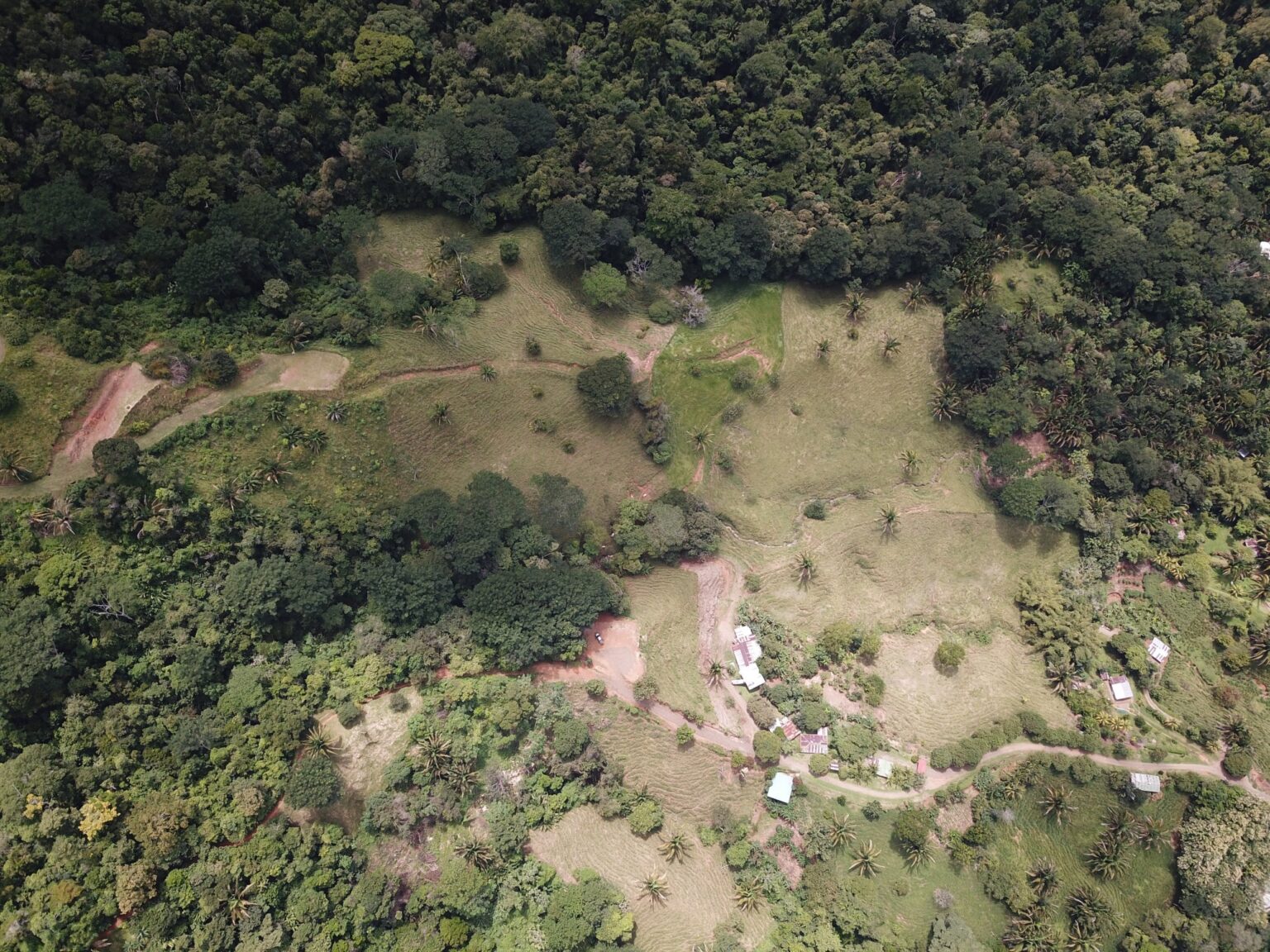
What we came to understand is that it’s all one problem. With no trees and nothing but cattle grass, there was nothing to hold the soil or shade the ground. Rain ran off the slopes instead of soaking in, carrying soil with it, and the creek had nothing protecting it.
We started by learning
We didn’t come into this as experts. We brought in people who were, we read everything we could, and we asked a lot of questions. Then we went to work, in roughly this order.
1. Replace the cattle grass
Large parts of the property were covered in grass planted for cattle. We pulled it out and replaced it with organic grass, trees and plants. Over time, native grass took hold again.
2. Hold the hillsides
Erosion was the most urgent problem, so we attacked it from several directions at once.
Vetiver. Vetiver is a clumping grass with a dense root system that grows straight down, deep into the soil. Planted in rows across a slope, it forms a living barrier that slows runoff and catches soil before it washes away. It is one of the most widely used plants for erosion control in the tropics.
Geobags. On the worst sections we laid geobags, fabric bags filled with soil, to stabilize the ground right away while the plants got established.
Layers of planting. Then we filled in with perennials, shrubs and palms, so the ground was covered and held at every level, from roots to canopy.
Today the erosion is under control.
3. Plant trees, starting with the creek
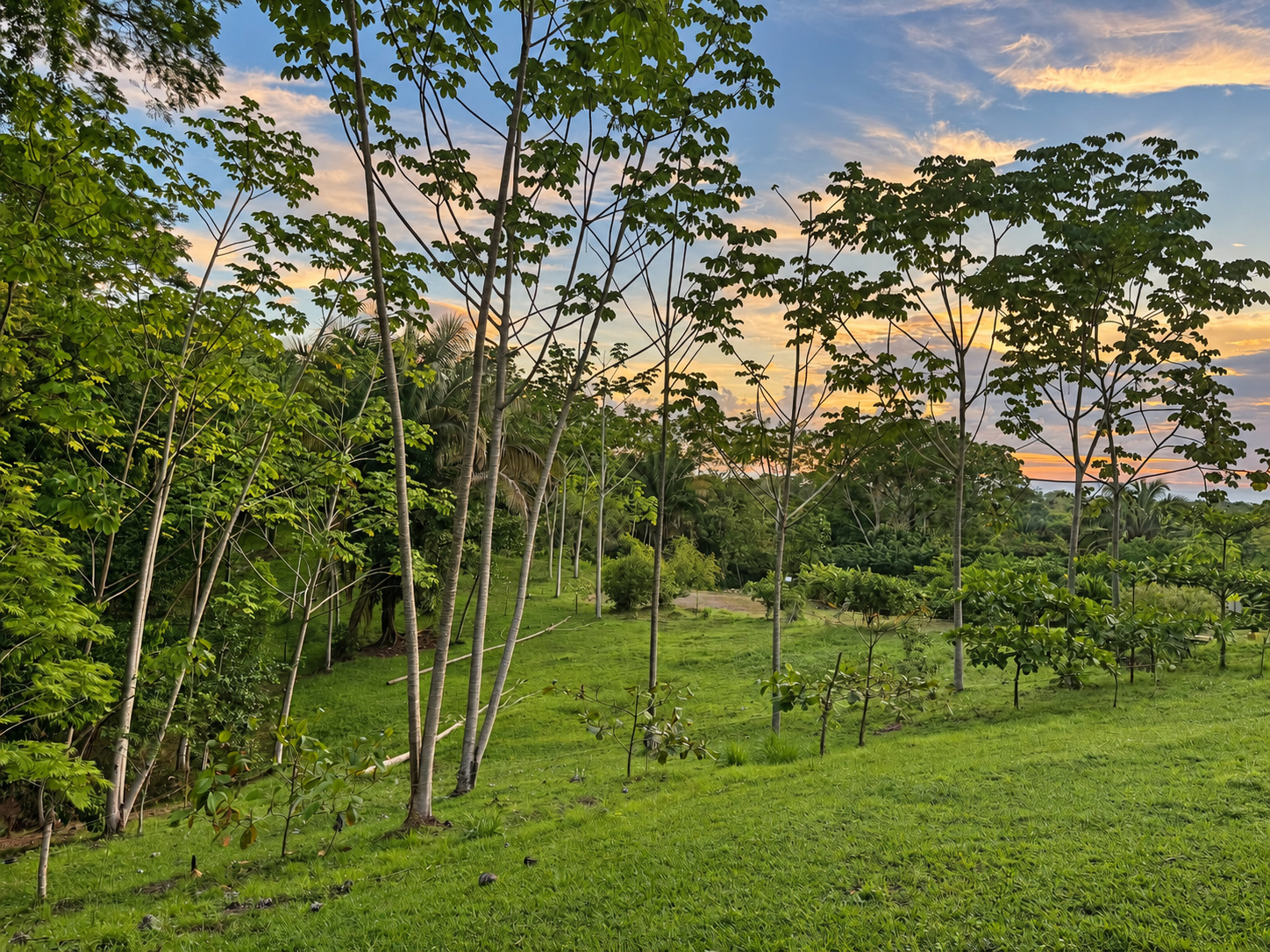
We’ve planted 1,500 trees on the property. Hundreds of them went in along the creek. Those trees have grown tremendously. Their shade keeps the ground cool, their roots hold the banks, and the leaves they drop feed the soil.
The creek that was running dry when we bought the land is flowing today.
4. Plan for the water
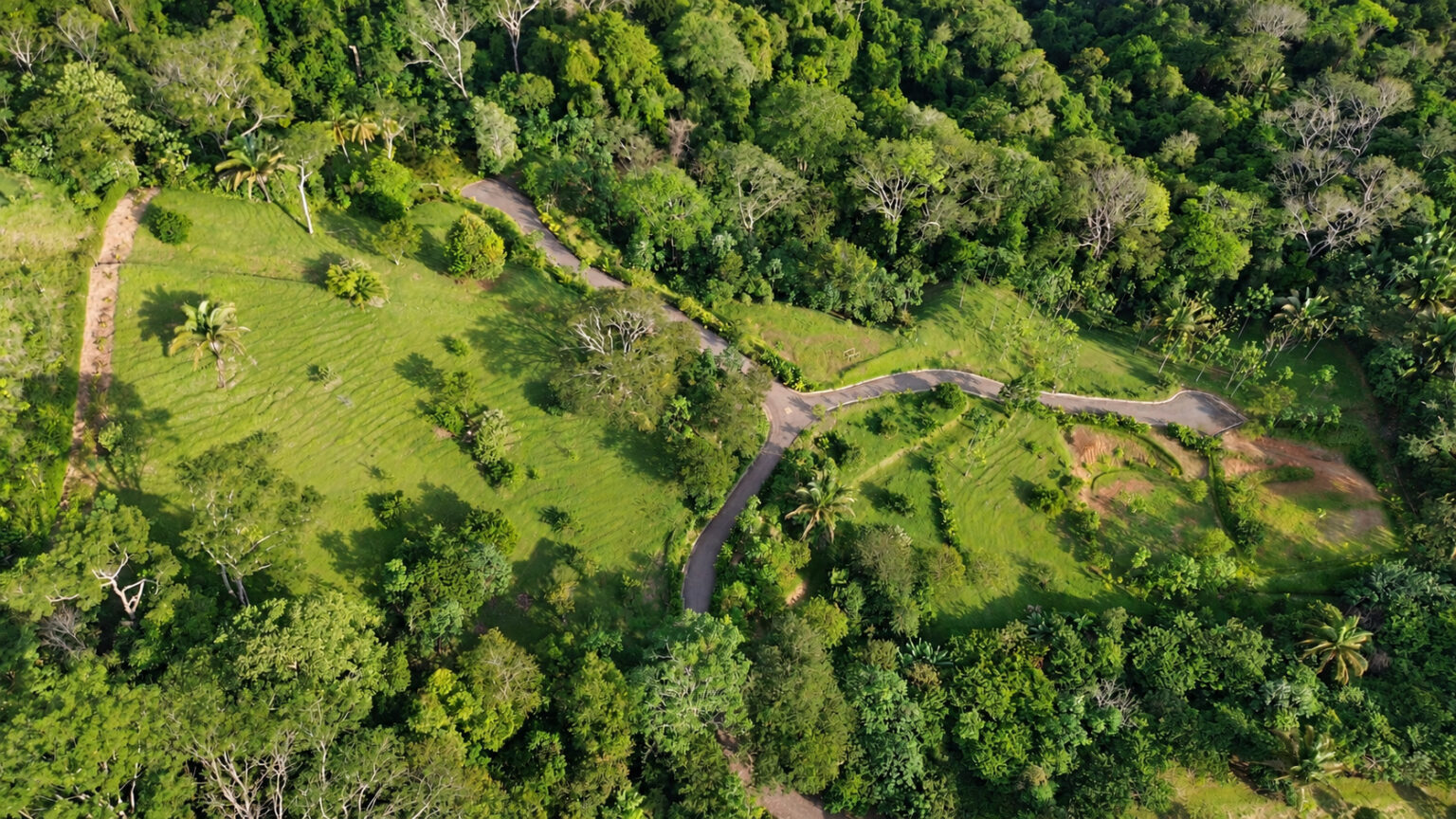
This part of Costa Rica gets heavy rain in the green season, roughly May through November. When we built the roads, we put in permanent concrete drainage and oversized it on purpose, so heavy rain is carried off without cutting new channels into the slopes we had just stabilized.
5. Let life come back
We kept planting: fruit trees and gardens. We brought in bees to pollinate them. And the wildlife came back on its own: macaws, toucans and monkeys. Our two quarter horses, Cali and Penny, now graze where the cattle used to.
What it means if you build here
If you buy a homesite at Farmstead Collection, you are building on land that has been put back together. The slopes are held, the creek is shaded and running, and the trees are already growing, so you don’t wait decades for shade. The roads, drainage, underground power, fiber and an ASADA water meter on every lot are already in place.
When you build, we’re happy to share what worked for us on the land.
See it for yourself. Read the full story of how we found and restored the land, or come walk it with us.
— Jed Kirby, founder, Farmstead Collection